
By Hans Ethan Carbonilla
Ten years ago, seeing homegrown Filipino artists on the world’s largest music festival stages felt like a distant ambition.
We were used to seeing global Filipinos make their mark—icons like Bruno Mars or Nicole Scherzinger who built their careers within foreign entertainment ecosystems. But for music fans back home, a different dream remained, and that is seeing artists who were fully nurtured, trained, and produced in the Philippines represent the culture on international grounds.
In 2026, that vision is concrete reality.
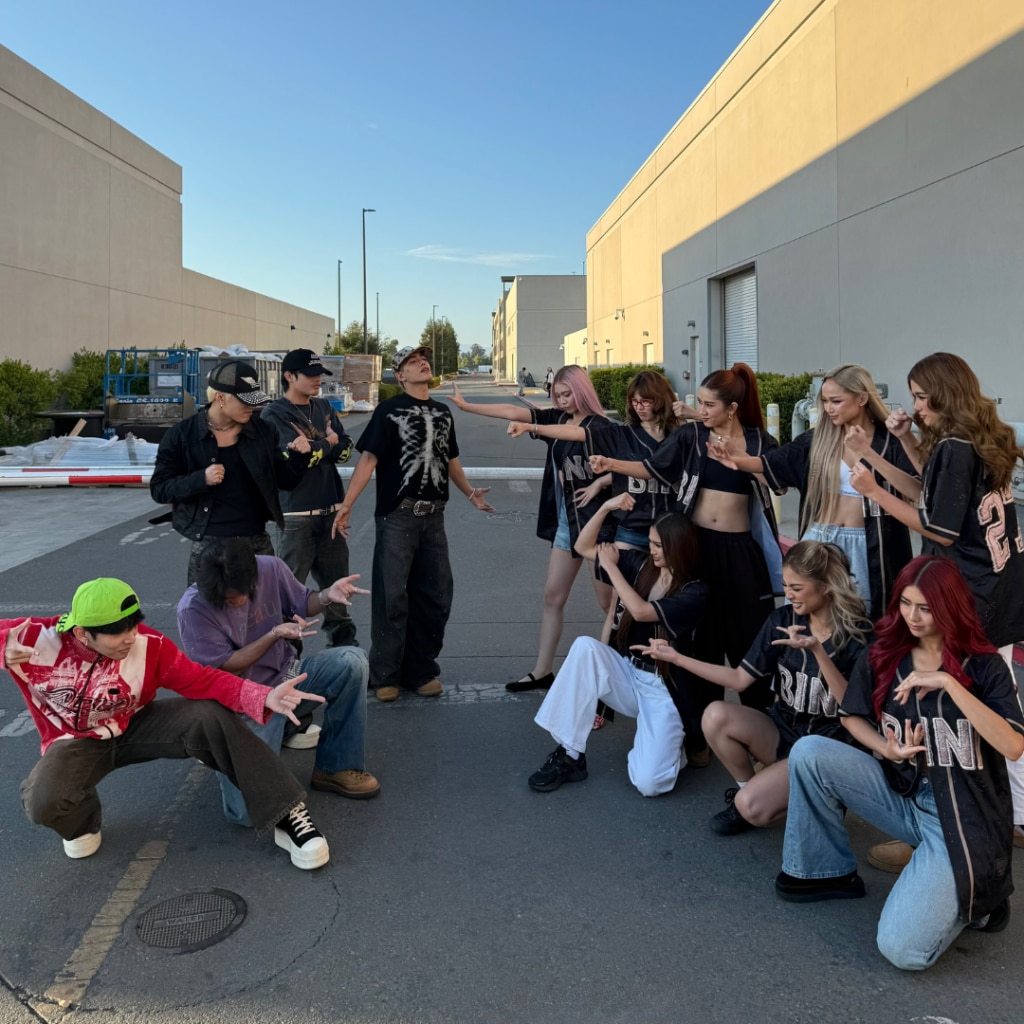
The Philippines has increasingly seen its homegrown pop acts move beyond regional recognition and into major international music spaces. BINI made history in April as the first all-Filipino group to perform at the Coachella Valley Music and Arts Festival for two weekends.
Months later, SB19 added another landmark achievement to the growing story of Filipino music abroad as they became the first all-Filipino act to perform at Lollapalooza in Chicago.
And most recently, both powerhouse groups alongside singer-songwriter ena mori solidified this momentum at Summer Sonic in Japan. Taking the stage across Tokyo and Osaka from August 14 to 16, BINI commanded the Mountain Stage while SB19 took on the Massive and Pacific Stages. Additionally, ena mori joined the official lineup as part of the Spotify Stage’s RADAR: Early Noise Special.
Their inclusion matters not simply because they are Filipino artists on an international lineup. It matters because of where they came from, because for decades, Filipino representation in global pop culture followed a predictable script.
Whenever an international talent show needed a vocal powerhouse, a viral internet video demanded a belting prodigy, or a foreign pop group needed a standout performer, a Filipino would step up to fill the spot. We cheered endlessly for Hollywood actors with a fraction of Pinoy lineage, celebrated diaspora kids who made it big in Western industries, and beamed with pride whenever a local singer blew away a foreign judge.
We were visible, yes, but always on someone else’s terms. We were the “world-class talents,” the dependable vocalists, the hardworking exports. That script is officially being torn up.
Both leading P-pop groups were built within the Philippine entertainment industry and developed their identities as Filipino acts before reaching international audiences. Their journeys offer a different picture of globalization, where Filipino artists do not necessarily have to leave home first to become globally visible.
The better representation
That is perhaps the most important part of this moment. Filipino representation is no longer limited to seeing someone of Filipino descent succeed overseas. Increasingly, it means seeing artists developed in the Philippines carry Filipino music, language, fashion and identity strongly with them.
When BINI performed at Coachella, their set included Filipino hits such as “Karera,” “Salamin, Salamin,” and “Pantropiko,” alongside their other releases. Their performance also incorporated Filipino-inspired fashion. Similarly, SB19’s Lollapalooza appearance became an opportunity to foreground Filipino heritage. For the festival, the group worked with stylist Roy Back on outfits inspired by Filipino culture, including indigenous embroidery and contemporary interpretations of Filipino design. In Summer Sonic, they did just the same.
These choices transform the performances from mere spectacles for fans back home into intentional acts of cultural visibility. Representation is about who holds the power to define what that image means and not just about placing a Filipino face on a global stage.
BINI and SB19 challenge that distinction
When BINI walks onto the Coachella stage, the audience is not simply seeing eight Filipino performers. It is encountering a group whose music, language, styling and identity were shaped within the Philippine pop culture landscape. When SB19 performs at Lollapalooza, the same thing happens.
And when Filipino artists appear at Summer Sonic, they are not entering the festival as representatives who have been detached from where they came from. They arrive carrying the culture with them and they do not arrive as cultural blank slates. They bring pieces of home with them, and well, that changes the meaning of the image.
The progression can also be seen beyond P-pop. Filipinos are increasingly visible in global groups, including Elisia and Gehlee of UNIS, JL of AHOF, and Sophia Laforteza of KATSEYE. These progressions are actively encoding Filipino identity into spaces that traditionally excluded it. This shifts the mechanics of visibility. It marks the difference between being represented by the global market and actively producing representation on our own terms.
So what does this mean for us? Perhaps it means finally being able to look at the global music industry without automatically seeing Filipino music as the underdog. It means being able to say that our music can stand alongside K-pop, J-pop, Western pop and other globally dominant sounds, not because it needs to imitate them, but because it has developed a sound and identity of its own.
Global Filipino acts are making Filipino talent visible within a global cultural space. And visibility matters because what audiences repeatedly see eventually becomes what audiences recognize as possible. And that is the real significance of seeing BINI, SB19 and ena mori at Summer Sonic, or any other homegrown Filipino acts thriving in international stages. It is about making sure that when the world looks toward the Philippines, it does not only see Filipino talent succeeding elsewhere, as it also sees what Filipino artists can create when they are given the opportunity to grow at home.
The dream was once to make it to the international stage. Now, the bigger challenge is to make that stage feel like home, too.