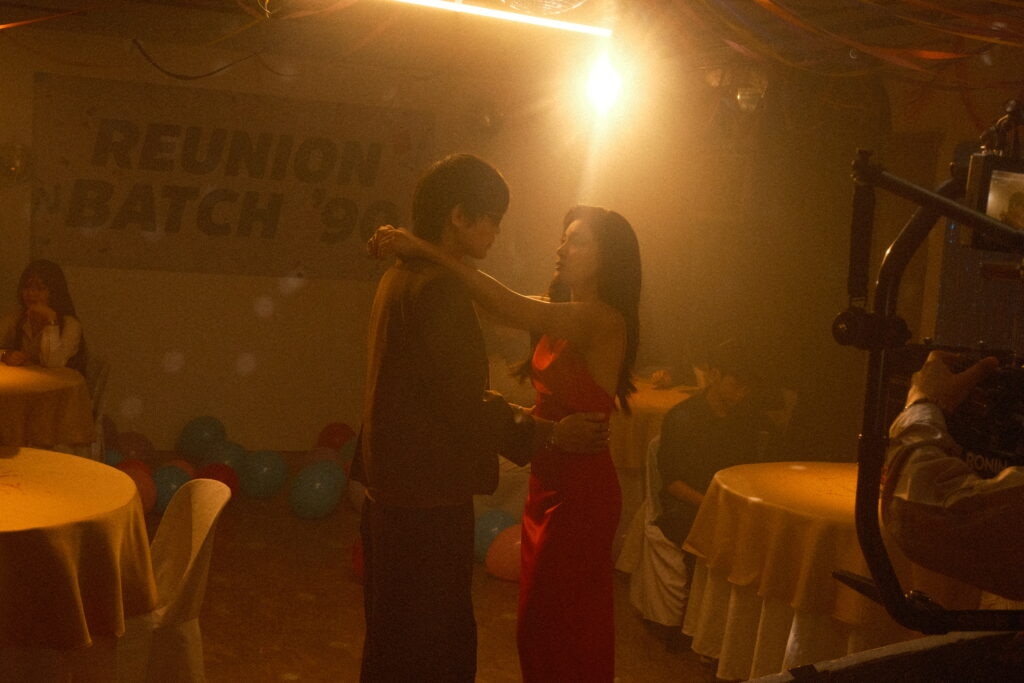
Arthur Nery continues to strengthen his foothold as one of today’s most influential OPM voices with the release of the official music video for “Di Nakakasawa,” his much-loved collaboration with Filipino hip-hop artist Kiyo. Well, the visual arrives with a narrative led by none other than Nadine Lustre.
First introduced to the public in September of last year as part of II: The Second, Nery’s sophomore album, “Di Nakakasawa” has quietly, and consistently, grown into a fan favorite. The track now has 23.9 million streams and has held its place on Spotify’s Weekly Top Songs for nine weeks.
The music video takes a surprising direction. It opens with a title card introducing Dr. Joel Barish, a neurologist and neuroscientist whose name echoes the protagonist of Eternal Sunshine of the Spotless Mind. But instead of following the film’s theme of erasing painful memories, the visual flips the concept entirely. Here, the male lead, portrayed by Nery, seems to be grappling with Alzheimer’s disease, a quietly devastating condition that blurs the boundaries of time and memory.
Rather than wiping away the past, the fictional procedure he undergoes promises to “relive your happiest memories.” What follows is a beautifully stitched montage: the couple’s first meeting at their high school reunion, their soft reunion as seniors, and the fleeting glances and gestures that define a lifetime shared. Lustre’s performance grounds the timeline shifts with emotional clarity, allowing viewers to piece together the fragments of their story.
Kiyo steps into the frame as well, offering more than just a cameo. His presence becomes a symbolic threat, an unexplained force the couple seems desperate to outrun. Though never directly explained, it adds a layer of tension that mirrors the internal battles a person with fading memories might face.
As the video reaches its ending, the emotional payoff lands. The treatment appears to work. Nery’s character finally recognizes the woman he loves, a moment portrayed with quiet triumph rather than grand theatrics. It’s a tender reminder that sometimes, remembering is its own kind of victory.
